PREPARING FOR THE ATHENS MARATHON: YOUR GUIDE TO 42.195 KM
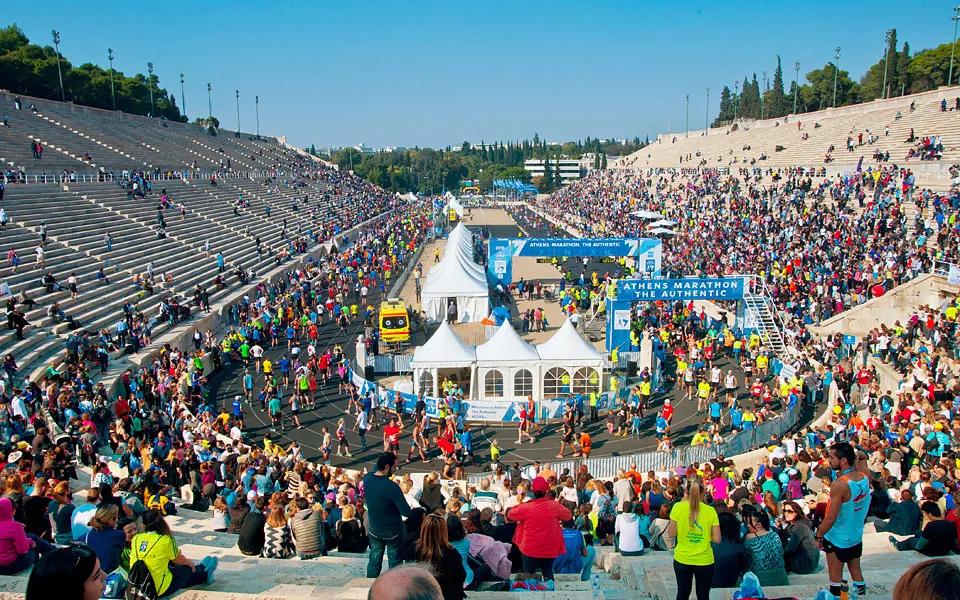
The Athens Marathon is not just another 42.195 km race. It follows the historic route from Marathon to Athens, with runners crossing the finish line inside the iconic Panathenaic Stadium.
Preparing for the Authentic Route requires more than simply increasing your mileage. It takes consistency, smart training, patience and a strategy designed for the course.
Whether this is your first marathon or another step towards a new personal goal, here are the essentials to keep in mind.
1. Know the course before race day
The Authentic Route has a character of its own.
The opening kilometres are relatively manageable, but from around 11 km the climbing begins. The course then alternates between uphill and downhill sections, with challenging climbs around 20 km, 25 km and 27–28 km.
That means one thing: don't do all your training on flat roads.
Gradually incorporate hills and rolling terrain into your programme so your legs know what to expect.
The course at a glance
| Distance
| Focus
|
| 0–10 km
| Stay controlled and settle into your rhythm
|
| 11–20 km
| The climbing begins
|
| 20–30 km
| The demanding section – stay patient
|
| 30–40 km
| Manage fatigue and maintain rhythm
|
| 40–42.195 km
| Final push towards the Panathenaic Stadium
|
2. Make the long run your best friend
Long runs are one of the foundations of marathon preparation.
The goal isn't to run 42 km before race day. It's to gradually teach your body to perform efficiently for longer periods.
Long runs also give you the opportunity to practise pacing, hydration and nutrition.
Build your distance progressively rather than chasing a huge weekly mileage number.
3. Not every run needs to be fast
One of the easiest mistakes to make is turning every training session into a performance test.
You don't need to.
Easy runs build your aerobic base. Faster sessions develop pace and efficiency. Long runs prepare you for endurance.
A simple training week might include:
| Session
| Purpose
|
| Easy Run
| Aerobic fitness & recovery
|
| Tempo / Marathon Pace
| Pace control
|
| Hill Training
| Prepare for elevation
|
| Long Run
| Endurance
|
| Strength Training
| Strength & stability
|
| Rest / Recovery
| Adaptation & recovery
|
The exact balance should always depend on your experience, training history and goals.
4. Train for Athens, not just for a marathon
If Athens is your goal, hills should be part of the preparation.
Hill repeats, steady runs over rolling terrain and long runs incorporating elevation can help prepare your legs for the specific demands of the Authentic Route.
You don't need to destroy yourself on hills every week.
You simply want to reach race day already knowing what climbing feels like on tired legs.
5. Practise your race-day nutrition
Never try something completely new on marathon morning.
Use your long runs to test the nutrition and hydration strategy you plan to follow during the race.
Find out what works for your body before you reach the start line.
The official Athens Marathon course includes organised support stations, with water available every 2.5 km and selected stations providing items such as isotonic drinks, gels and bananas.
6. Choose your running shoes carefully
Over 42.195 km, comfort becomes increasingly important.
Your marathon shoes should fit properly, feel comfortable over long distances and — most importantly — have already been tested during training.
Look for:
- secure and comfortable fit
- sufficient cushioning
- stability
- long-distance comfort
- reliable grip
- a model you've already tested on long runs
Don't arrive at the start line wearing brand-new shoes.
The same applies to socks, shorts, tops and other race-day equipment.
7. Recovery is part of training
More kilometres don't automatically mean better preparation.
Sleep, rest, nutrition and recovery days are all part of your marathon programme.
Listen to your body, and don't ignore persistent pain or unusual discomfort.
8. The final weeks: trust your training
As race day approaches, training typically enters the taper phase, where overall volume is reduced to allow your body to recover before the marathon.
This isn't the time to suddenly squeeze in extra training.
It's the time to trust the work you've already done.
Race Day Checklist
- Tested running shoes
- Socks you've used on long runs
- Tested race outfit
- Gels / nutrition plan
- Hydration strategy
- Fully charged running watch
- Race bib & essentials
- Realistic pacing plan
9. Finally, enjoy it
There will be easy kilometres. There will be difficult kilometres. And there may be a moment when you wonder why you decided to do this in the first place.
Then Athens arrives.
And when you enter the Panathenaic Stadium for those final metres, every kilometre of preparation suddenly feels worth it.
42.195 km. One Authentic Route. One finish line worth all the effort.